Keeping your air conditioning in top working order does not have to be complicated. With a few simple checks and small tasks spread through the year you can reduce breakdowns, lower energy use, and keep indoor comfort steady when temperatures rise.
This article walks through Simple Steps For AC Maintenance that save time and money. You will find clear actions you can take right away plus tips for when a trained technician should inspect components beyond basic upkeep.
Simple Steps For AC Maintenance to Do Every Month
Monthly attention is one of the easiest ways to prevent larger problems. Spend 15 to 30 minutes on these actions and the unit will thank you with more reliable operation.
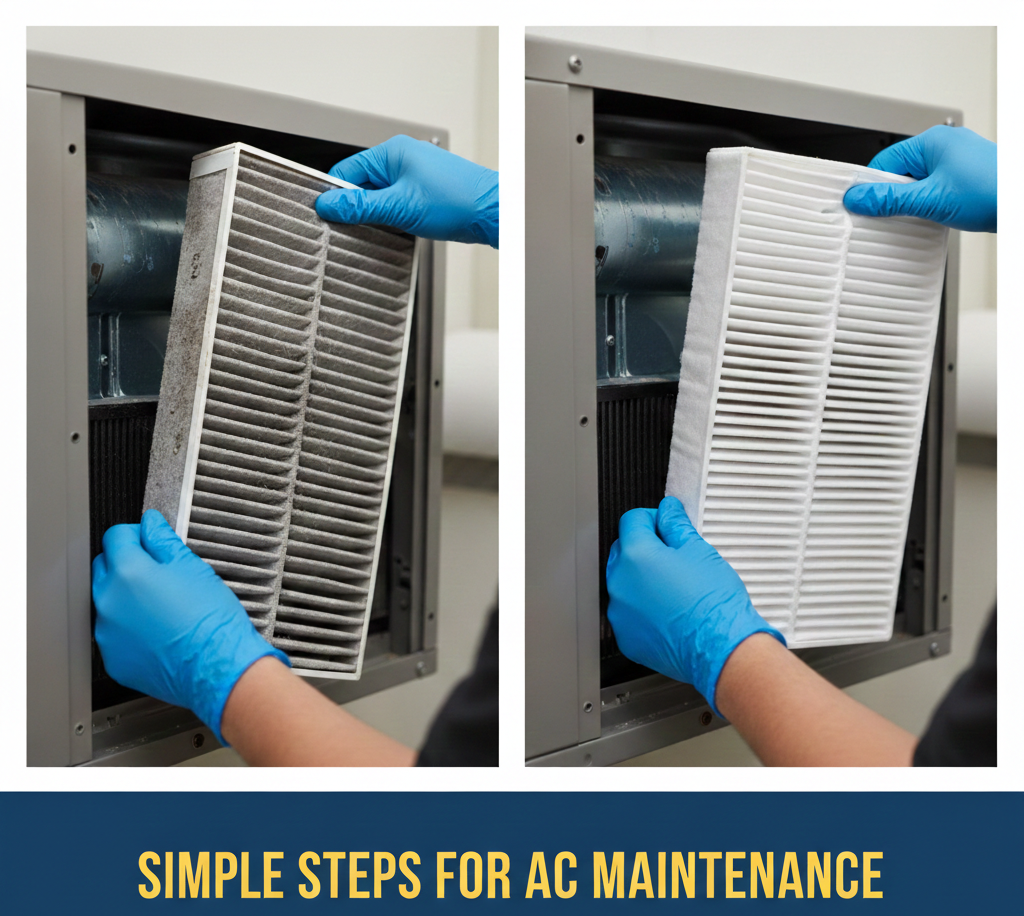
- Check air filters Replace or clean filters if they look dirty. A clogged filter reduces airflow and forces the system to work harder.
- Inspect vents and registers Make sure supply and return vents are open and free of dust or furniture that blocks airflow.
- Listen for unusual sounds Rattles, grinding, or hissing are warning signs that need attention before damage occurs.
- Monitor thermostat settings Confirm the thermostat is operating correctly and that batteries are fresh if it is a battery powered model.
Seasonal Checks Before Heavy Use
Tune up tasks at the start of cooling season and again in late summer catch wear early and keep efficiency steady. These checks can prevent sudden failures on the hottest days.
- Clean or replace filters Replace disposable filters or wash reusable types following manufacturer directions.
- Clear around the outdoor unit Trim plants and remove debris so the condenser can move air freely.
- Test run cycles Switch the system from heating to cooling if you have a heat pump and let it run through several cycles to check performance.
How to Clean the Outdoor Unit and Condenser
The outdoor condenser unit needs clear airflow to reject heat. Dirt and leaves can cut performance and lead to overwork.
Simple cleaning steps
- Turn off power at the service switch or breaker before doing any work.
- Remove leaves, grass clippings, and surface debris by hand or with a soft brush.
- Use a garden hose on low pressure to rinse fins from the inside out to avoid bending them.
When to straighten or replace fins
Bent fins reduce airflow. If a few fins are bent a fin comb can correct them. If the fin damage is widespread consult a technician who can evaluate whether repair is practical.
Air Filter Choices and Why They Matter
Filters come in different ratings and types. Picking the right one balances air quality with performance.
- Basic fiberglass filters Low cost and protect the equipment but do not capture fine particles well.
- Pleated filters Capture more dust and pollen while still allowing good airflow when changed on a regular schedule.
- High efficiency filters Capture fine particles but may restrict airflow in older systems. Check the system manual or ask a technician before upgrading.
Tip Keep a spare filter on hand so you can replace it immediately when the current one seems clogged.
Refrigerant and System Performance Checks
Refrigerant levels and pressures are critical for cooling capacity. These items require special tools so most homeowners should leave them to trained service personnel.
Signs of refrigerant issues
- Weak cooling or long run times without reaching set temperature
- Ice build up on the evaporator coil or refrigerant lines
- Hissing sounds near the outdoor unit
What a technician will do
A trained technician checks pressures, inspects for leaks, and measures temperature differences across the coil. If refrigerant must be added they will follow legal handling rules and test for leaks to avoid repeated service calls.
Electrical, Drain, and Coil Care
Small electrical faults and blocked condensate drains are common sources of failures. A few checks can help you spot trouble early.
- Inspect wiring and connections Look for loose or corroded connections at accessible panels. Turn power off first.
- Check the condensate drain If the drain is slow or clogged water can back up and trigger safety switches.
- Clean the evaporator coil Light dust can be removed with a soft brush. Heavy buildup requires a foaming coil cleaner used by a technician.
When to Call a Trained Technician and What to Ask
DIY care covers many routine tasks but there are clear moments to bring in a pro. If you see electrical arcing, an oil like smell, persistent ice on coils, or repeated system shut downs call for service.
When you call, ask about the technician credentials and whether they will provide a written estimate. For long term support consider providers that offer planned maintenance programs. If you want an example of a company that handles regular inspections and repairs see this link for routine cooling system care
Energy and Comfort Benefits From Regular Care
Consistent upkeep brings measurable gains. Clean filters and unblocked coils reduce run time and lower the chance of compressor stress. Even small savings add up over a cooling season.
- Shorter run cycles reduce wear on moving parts
- More even temperatures lead to fewer thermostat adjustments and better comfort
- Fewer emergency calls save money over time
Real world example A homeowner who changed filters monthly and cleared the outdoor unit reported steadier cooling and fewer complaints about warm rooms. The reduction in run time translated to noticeable savings on monthly energy bills.
Practical Tips to Make Maintenance Stick
Use a checklist and calendar reminders to keep tasks on track. Pair seasonal checks with daylight saving time changes or with spring and fall yard work. Keep a small toolkit, spare filters, and basic supplies near the system to make the job faster.
- Set phone reminders for filter checks
- Keep a simple log of service dates and any parts replaced
- Label the service switch and circuit breaker for quick shutdown during work
Regular attention to these Simple Steps For AC Maintenance keeps systems running longer and helps avoid peak season stress. A modest time investment each month and a more thorough check each season stop small issues from growing into large repairs. If you follow the filter and outdoor unit checks, watch for basic warning signs, and schedule professional inspections when needed you will preserve comfort and get more years from your equipment.
Ready to protect your cooling investment Start by checking your filter and clearing the area around the outdoor unit this weekend. If you see any of the warning signs described here arrange a service visit. Regular work now saves money and avoids emergency calls during hot weather. Reach out to a reputable local technician for a maintenance visit and set up a plan that fits your schedule. Small steps taken consistently make a big difference to comfort and to the life span of your system.